

- University
- Academic
- Schools/Vocational Schools
- Vocational School of Justice
- Vocational School
- Vocational School
- Department of Banking and Insurance (Turkish)
- Department of Computer Programming (Turkish)
- Department of Foreign Trade (Turkish)
- Department of Graphic Design (Turkish)
- Department of Interior Design (Turkish)
- Department of Construction Technology (Turkish)
- Department of Occupational Health and Safety (Turkish)
- Department of Media and Communication (Turkish)
- Department of Architectural Restoration (Turkish)
- Department of Radio and Tv Programming (Turkish)
- Department of Civil Aviation Cabin Services (Turkish)
- Department of Civil Aviation Transportation Management (Turkish)
- Department of Tourism and Hotel Management (Turkish)
- Department of Applied English Translation
- Vocational School Of Health Services
- Vocational School Of Health Services
- Department of Child Development (Turkish)
- Department of Physiotherapy (Turkish)
- Department of Paramedic (Turkish)
- Department of Opticianry (Turkish)
- Department of Medical Documentation and Secreteriat (Turkish)
- Department of Medical Imaging Techniques (Turkish)
- Department of Medical Laboratory Techniques (Turkish)
- Department of Elderly Care (Turkish)
- School of Applied Management Sciences
- School of Foreign Languages
- Faculties
- Faculty of Arts and Sciences
- Faculty of Fine Arts and Design
- Faculty of Law
- Faculty of Communication
- Faculty of Business
- Faculty of Engineering
- Faculty of Engineering
- Department of Computer Engineering
- Department of Biomedical Engineering
- Department of Electrical and Electronics Engineering
- Department of Industrial Engineering
- Department of Food Engineering
- Department of Genetics and Bioengineering
- Department of Aerospace Engineering
- Department of Civil Engineering
- Department of Mechanical Engineering
- Department of Mechatronics Engineering
- Department of Software Engineering
- Faculty of Health Sciences
- Medicine
- Graduate School
- Common Courses
- Schools/Vocational Schools
- Research
- Research Centers
- Library
- Smart Campus
- Technology Transfer Office
- İzmir Sciencepark
- Continuous Education Center (EKOSEM)
- Children's University
- Ethics Committee
- Teaching and Learning Center (EKOEĞİTİM)
- Psychology Application and Research Center
- Researcher Training Coordinatorship
- Research Collaborations And Innovation Coordinatorship
- Campus
- INTERNATIONAL
- Contact
- 25TH YEAR
Department of Psychology
PSY 344 | Course Introduction and Application Information
| Course Name |
Coping with Stress
|
|
Code
|
Semester
|
Theory
(hour/week) |
Application/Lab
(hour/week) |
Local Credits
|
ECTS
|
|
PSY 344
|
Fall/Spring
|
3
|
0
|
3
|
6
|
| Prerequisites |
None
|
|||||
| Course Language |
English
|
|||||
| Course Type |
Elective
|
|||||
| Course Level |
First Cycle
|
|||||
| Mode of Delivery | - | |||||
| Teaching Methods and Techniques of the Course | DiscussionQ&ALecture / Presentation | |||||
| National Occupation Classification | - | |||||
| Course Coordinator | - | |||||
| Course Lecturer(s) | ||||||
| Assistant(s) | - | |||||
| Course Objectives | The aim of this course is to provide an in-depth understanding of stress, coping, and resilience by examining major theories and models of stress. It aims to equip students with the ability to analyze physiological and psychological responses to stress, as well as the biological, cognitive, and social factors that influence these processes. |
| Learning Outcomes |
The students who succeeded in this course;
|
| Course Description | This course explores the fundamental concepts of stress, coping, and resilience, examining their psychological, physiological, and social dimensions. Students will gain an understanding of various stress management techniques and learn how to apply them in daily life. The course also covers major models of stress and coping, along with practical strategies to enhance well-being and resilience. |
| Related Sustainable Development Goals |
|
|
|
Core Courses | |
| Major Area Courses |
X
|
|
| Supportive Courses | ||
| Media and Management Skills Courses | ||
| Transferable Skill Courses |
WEEKLY SUBJECTS AND RELATED PREPARATION STUDIES
| Week | Subjects | Related Preparation |
| 1 | What is Stress? | Greenberg, J. S. (2021). Comprehensive Stress Management (15th ed.). McGraw-Hill Education. (Chapter 1, pp. 2-25) |
| 2 | Stress Psychophysiology | Greenberg, J. S. (2021). Comprehensive Stress Management (15th ed.). McGraw-Hill Education. (Chapter 2, pp. 25-43) |
| 3 | Stress and Illness/Disease | Greenberg, J. S. (2021). Comprehensive Stress Management (15th ed.). McGraw-Hill Education. (Chapter 3, pp. 43-75) |
| 4 | Stress and the College Student | Greenberg, J. S. (2021). Comprehensive Stress Management (15th ed.). McGraw-Hill Education. (Chapter 4, pp. 75-108) |
| 5 | Intervention / Life-Situation Interventions: Intrapersonal | Greenberg, J. S. (2021). Comprehensive Stress Management (15th ed.). McGraw-Hill Education. (Chapter 5&6, pp. 108- 147) |
| 6 | Life-Situation Interventions: Interpersonal | Greenberg, J. S. (2021). Comprehensive Stress Management (15th ed.). McGraw-Hill Education. (Chapter 7, pp. 147-177) |
| 7 | Perception Interventions / Spirituality and Stress | Greenberg, J. S. (2021). Comprehensive Stress Management (15th ed.). McGraw-Hill Education. (Chapter 8&9, pp. 177-235) |
| 8 | Meditation / Autogenic Training, Imagery, and Progressive Relaxation | Greenberg, J. S. (2021). Comprehensive Stress Management (15th ed.). McGraw-Hill Education. (Chapter 10&11, pp. 236-277) |
| 9 | Midterm Exam | |
| 10 | Other Relaxation Techniques | Greenberg, J. S. (2021). Comprehensive Stress Management (15th ed.). McGraw-Hill Education. (Chapter 12, pp. 277- 305) |
| 11 | Physiological Arousal Interventions / Strategies for Decreasing Stressful Behaviors | Greenberg, J. S. (2021). Comprehensive Stress Management (15th ed.). McGraw-Hill Education. (Chapter 13&14, pp. 306-351) |
| 12 | Diversity and Stress | Greenberg, J. S. (2021). Comprehensive Stress Management (15th ed.). McGraw-Hill Education. (Chapter 15, pp. 351-380) |
| 13 | Occupational Stress | Greenberg, J. S. (2021). Comprehensive Stress Management (15th ed.). McGraw-Hill Education. (Chapter 16, pp. 380-419) |
| 14 | Family Stress | Greenberg, J. S. (2021). Comprehensive Stress Management (15th ed.). McGraw-Hill Education. (Chapter 17, pp. 419-441) |
| 15 | Semester Review | |
| 16 | Final Exam |
| Course Notes/Textbooks | Greenberg, J. S. (2021). Comprehensive Stress Management (15th ed.). McGraw-Hill Education. |
| Suggested Readings/Materials |
EVALUATION SYSTEM
| Semester Activities | Number | Weigthing |
| Participation | ||
| Laboratory / Application | ||
| Field Work | ||
| Quizzes / Studio Critiques | ||
| Portfolio | ||
| Homework / Assignments |
1
|
5
|
| Presentation / Jury | ||
| Project | ||
| Seminar / Workshop | ||
| Oral Exams | ||
| Midterm |
1
|
40
|
| Final Exam |
1
|
55
|
| Total |
| Weighting of Semester Activities on the Final Grade |
2
|
45
|
| Weighting of End-of-Semester Activities on the Final Grade |
1
|
55
|
| Total |
ECTS / WORKLOAD TABLE
| Semester Activities | Number | Duration (Hours) | Workload |
|---|---|---|---|
| Theoretical Course Hours (Including exam week: 16 x total hours) |
16
|
3
|
48
|
| Laboratory / Application Hours |
16
|
0
|
|
| Study Hours Out of Class |
14
|
2
|
28
|
| Field Work |
0
|
||
| Quizzes / Studio Critiques |
0
|
||
| Portfolio |
0
|
||
| Homework / Assignments |
1
|
5
|
5
|
| Presentation / Jury |
0
|
||
| Project |
0
|
||
| Seminar / Workshop |
0
|
||
| Oral Exam |
0
|
||
| Midterms |
1
|
40
|
40
|
| Final Exam |
1
|
55
|
55
|
| Total |
176
|
COURSE LEARNING OUTCOMES AND PROGRAM QUALIFICATIONS RELATIONSHIP
|
#
|
Program Competencies/Outcomes |
* Contribution Level
|
|||||
|
1
|
2
|
3
|
4
|
5
|
|||
| 1 |
To have knowledge of basic concepts, theories, approaches (behavioral, biological, cognitive, evolutionary, social, developmental, statistical, humanistic, psychodynamic, and socio-cultural), and current applications specific to the field of psychology by using current course materials and instruments. |
-
|
-
|
-
|
X
|
-
|
|
| 2 |
To have basic knowledge and skills about the applications in the different subfields of psychology. |
-
|
-
|
-
|
-
|
-
|
|
| 3 |
To have basic knowledge about the testing and measurement instruments used in different subfields of psychology and basic level skill that does not require expertise in carrying out applications in different subfields of psychology. |
-
|
-
|
X
|
-
|
-
|
|
| 4 |
To make use of other disciplines that may contribute to psychology and have basic knowledge about the contribution of psychology to these disciplines. |
-
|
-
|
-
|
-
|
-
|
|
| 5 |
To have cumulative knowledge about the position of psychology as a scientific discipline in Turkey, the conducted research, applications and problems encountered from past to present in the field of psychology. |
-
|
-
|
-
|
-
|
-
|
|
| 6 |
To have the competence to conduct a research individually and/or as a team using the knowledge acquired in the field of psychology, interpret the findings obtained by using scientific problem solving and critical thinking approaches. |
-
|
X
|
-
|
-
|
-
|
|
| 7 |
To have the ability to construct a research hypothesis, create a research design, collect data, analyze it, report it in a scientific writing format, and interpret it by using basic knowledge related to testing and measurement, research methods, and statistics acquired in the field of psychology. |
-
|
-
|
-
|
-
|
-
|
|
| 8 |
To have the competence to share the theoretical and applied knowledge acquired in the field of psychology with the experts and lay people by using the required information and communication technologies in scientific studies and events that benefit the society. |
-
|
-
|
-
|
-
|
-
|
|
| 9 |
To have knowledge of the relevant professional and ethical values in the domains of psychology and respect individual differences and human rights in research and practices related to psychology. |
-
|
-
|
X
|
-
|
-
|
|
| 10 |
To constantly renew herself/himself professionally by following both national and international publications in the field of psychology, the developments in testing and measurement instruments and software programs used in the discipline. |
-
|
-
|
-
|
-
|
-
|
|
| 11 |
To establish written and verbal communication with experts and lay people by using both Turkish and English. |
-
|
-
|
-
|
-
|
-
|
|
| 12 |
To be able to speak a second foreign at a medium level of fluency efficiently. |
-
|
-
|
-
|
-
|
-
|
|
| 13 |
To be able to relate the knowledge accumulated throughout the human history to their field of expertise. |
-
|
-
|
-
|
-
|
-
|
|
*1 Lowest, 2 Low, 3 Average, 4 High, 5 Highest
Social Media


Social Media
NEWSALL NEWS


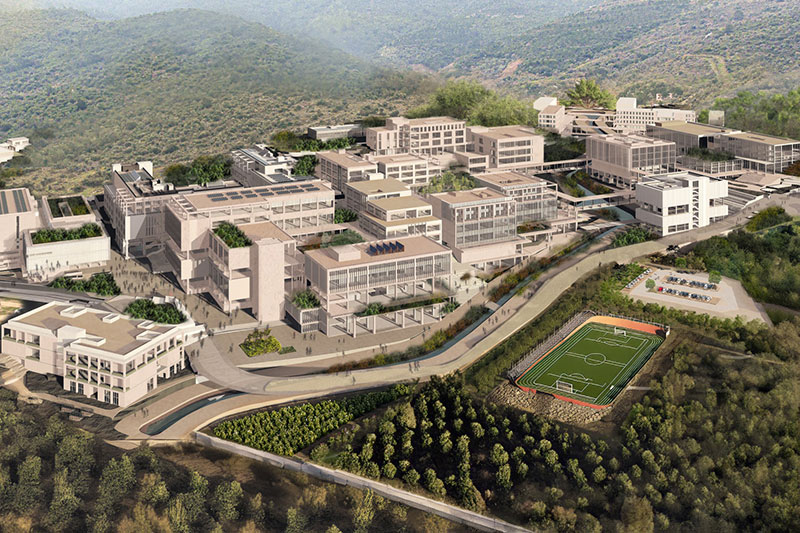
IZMIR UNIVERSITY OF ECONOMICS GÜZELBAHÇE CAMPUS
DetailsGLOBAL CAREER
As Izmir University of Economics transforms into a world-class university, it also raises successful young people with global competence.
More..CONTRIBUTION TO SCIENCE
Izmir University of Economics produces qualified knowledge and competent technologies.
More..VALUING PEOPLE
Izmir University of Economics sees producing social benefit as its reason for existence.
More..
You are one step ahead with your graduate education at Izmir University of Economics.